
Top SP Series Roller Chains Companies for Reliable Power Transmission
2026-10-19
Finding a dependable SP series roller chain supplier is critical when downtime costs more than the parts themselves. The market is crowded, but only a handful of manufacturers consistently deliver the strength and precision required for reliable power transmission. In this roundup, we spotlight the top companies worth your attention—including Raydafon, a name gaining traction for its durable, application-ready chains.
Precision Engineering Leaders in SP Roller Chain Manufacturing
Few manufacturers can justify the title of precision engineering leader in SP roller chain production without demonstrating an almost obsessive control over dimensional tolerances. In this niche, excellence is not measured by catalog size but by how consistently a chain’s pitch, roller diameter, and plate thickness align under real-world load. The best workshops treat each SP chain as a mechanical promise: the pin-bushing interface must be ground to mirror finishes, the side plates heat-treated to resist fatigue, and every link preloaded to eliminate initial stretch. This level of scrutiny is why top-tier SP roller chains survive in high-shock conveyors where lesser products fail within weeks.
What separates true leaders is their refusal to outsource the critical steps. Rather than buying generic bushings and pins, they draw their own wire, cold-head their own components, and run proprietary surface treatments that quiet the chain’s articulation. We have seen production floors where air gauges read roller concentricity to half a micron, and where statistical process control charts govern each batch of steel before it enters the stamping press. That internal capability translates directly into longer service intervals and lower maintenance costs for end users—claims backed not by marketing prose, but by field data from mining, automotive, and packaging lines.
Yet precision alone is not enough; leadership requires adaptability. The strongest SP roller chain makers marry tight tolerances with application-specific engineering. They will modify roller hardness for abrasive environments, specify sealed joints for dusty grain elevators, or adjust press-fit interference to eliminate micro-fretting in high-speed drives. This is not bespoke boutique work—it is the natural result of running a factory where metrology labs sit next to assembly stations, and where a design change can be validated on a dedicated fatigue rig within a day. Such agility keeps them ahead of generic importers and earns the trust of plant engineers who cannot afford unplanned downtime.
Built to Last: Companies Redefining Chain Durability
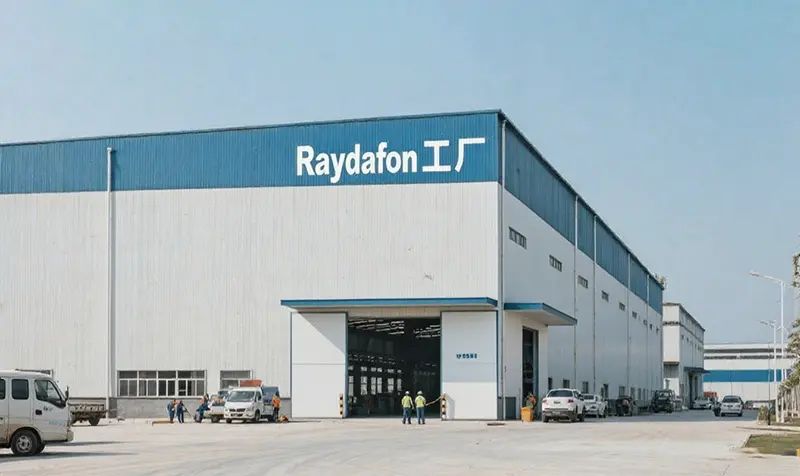
For decades, chain durability was treated as a simple metallurgy problem: use harder steel, add a thicker plate, and call it a day. That approach has quietly collapsed. A handful of manufacturers are now pulling apart every failure mode—pin wear, roller fatigue, plate cracking, even corrosion under low load—and rebuilding the product from the inside out. The result is a new class of chains that outlasts traditional designs by two to three times in field tests, without adding weight or sacrificing flexibility.
The shift isn't just about raw materials. Companies are using advanced heat treatment profiles that create a softer, tougher core beneath a hardened surface, letting the chain absorb shock without cracking. Some have moved to precision-machined rollers that reduce internal friction at the pin-bushing interface, the spot where most chains die. Others are applying diamond-like carbon coatings or nitriding processes that drastically cut wear in dusty, abrasive environments—think mining conveyors or agricultural balers running 18 hours a day.
What makes these efforts credible is the testing behind them. Instead of relying on static load ratings, forward-thinking firms now run accelerated life-cycle rigs that simulate months of real-world abuse in days. They publish the data, warts and all. That transparency is forcing the rest of the industry to stop selling vague promises and start engineering for actual service intervals. For buyers, the message is simple: if a chain maker can't show you a wear curve, it probably doesn't have one.
Custom SP Chain Solutions for Specialized Power Transmission
When off-the-shelf chain products can't keep pace with extreme loads, tight geometries, or aggressive duty cycles, our engineering team steps in at the design stage. We work from your torque curves, shaft spacing, and environmental constraints to develop SP chains with non-standard pitches, pin coatings, or side plate profiles. The result is a power transmission element that fits the surrounding machinery instead of forcing the machinery to adapt.
Each custom SP chain is validated through finite element analysis and test rigs that replicate your actual operating conditions, including shock loading and temperature swings. From food-grade stainless variants to high-tensile alloy constructions for mining drives, the chain geometry is tuned to reduce polygon effect and extend service intervals. Production runs can be scaled from a single prototype loop to full OEM supply without losing traceability on material batches and heat treatment records.
Trusted SP Chain Suppliers Across Heavy Industries
When a dragline excavator sits idle because a single bearing failed, the cost per hour far exceeds the price of the part. That reality shapes how maintenance teams across mining, steel, and cement plants evaluate spare parts suppliers. A trusted SP chain partner isn't just a vendor with a long catalog; it's one that has survived the same harsh conditions your equipment faces. They know which components tend to fail after a certain number of cycles, and they stock those items before you even place the order.
Trust in this space is earned through consistency rather than marketing. The best suppliers maintain relationships with OEMs and aftermarket manufacturers, but they also run their own quality checks on incoming parts. One shipment of substandard hydraulic seals can shut down a processing line for days, so repeat customers often stay loyal to suppliers who have never let a bad batch through. Word travels fast in heavy industry, and a reputation built over twenty years can be lost with a single counterfeit bearing.
Cross-industry experience adds another layer of reliability. A supplier that serves both offshore drilling and aggregate crushing understands how corrosion, vibration, and extreme temperatures affect different materials. That knowledge allows them to recommend upgrades or alternative parts that a single-industry vendor might miss. When emergency replacements are needed, these established chains can draw on warehouses located near major industrial hubs, cutting lead times from weeks to days.
Consistent Supply Chains: Top SP Roller Chain Producers
Reliable delivery has become the real differentiator among roller chain manufacturers, and a handful of producers have built their reputations on it. These companies keep buffer stocks at regional hubs, run multiple production shifts, and use standardized raw material contracts to avoid the stop-start shortages that plague smaller suppliers.
What sets the top SP roller chain producers apart is less about catalog size and more about their ability to hold to confirmed lead times. They often run dedicated lines for high-volume sizes, which means a standard 40 or 50 series order does not get stuck behind custom work. That practical focus keeps distributors from having to pad their own inventory.
Quality control also feeds supply consistency. Leading producers track wear life and link fatigue data from the field, then loop that back into heat treatment and pin hardening adjustments. The result is fewer unplanned replacements and a smoother flow of product through the channel, quarter after quarter.
From Selection to Maintenance: Companies with Expert Support
Choosing the right equipment or system is only the starting point. The companies that genuinely stand out are the ones that stay close after the purchase. Their engineers help with sizing, compatibility, and configuration before you commit, then remain available for calibration, software updates, and unexpected troubleshooting. You're not left guessing which model fits your workflow or whether a particular add-on will cause conflicts downstream.
That support doesn't disappear once the installation is complete. A good partner schedules regular check-ins, monitors performance data where possible, and flags small issues before they become expensive failures. When something does go wrong, you talk to someone who already knows your setup rather than starting from scratch with a call center script. This continuity saves hours of downtime and prevents the frustration of repeating the same details to multiple handlers.
Maintenance also becomes more than a checklist. The support team can recommend adjustments based on how your usage patterns change, help with inventory for spare parts, and guide you through end-of-life decisions. Over time, this turns a transactional relationship into a practical partnership, where the equipment keeps earning its keep and you keep a clear line to expert advice.
FAQ
SP Series chains are often specified for heavy-duty conveyors, agricultural machinery, and industrial drives where standard chains wear out too quickly. Their link plates and pins are engineered to handle higher shock loads and longer operating cycles.
A handful of global manufacturers stand out because they control the full production process—from steel selection to heat treatment—and publish fatigue data. Names like Tsubaki, Renold, and Diamond have built trust over decades, but regional specialists also compete well on customization and lead times.
Look beyond the surface finish. Reliable chains show consistent hardness across pins, bushings, and rollers, and the manufacturer provides tensile strength and elongation test results. Poorly made chains often skip shot peening or use lower-grade alloy steel, which shows up as premature elongation.
Lubrication is often the deciding factor between a chain that lasts five years and one that fails in six months. Proper oil or grease penetration into the pin-bushing interface reduces friction and flushes away wear debris, so many top suppliers offer pre-lubricated or sealed variants for harsh environments.
In applications with frequent starts, stops, or shock loads, yes. The higher initial cost is usually recovered through fewer replacements, less downtime, and lower maintenance labor. For light-duty, constant-speed drives, a standard chain may be sufficient, but reliability-focused buyers often choose SP Series as insurance.
ISO 606 and ANSI B29.1 are the baseline dimensional standards, but top suppliers often exceed them. Buyers should request evidence of ISO 9001 quality management, material traceability, and third-party fatigue testing. Some industries also require food-grade or corrosion-resistant coatings.
They usually offer engineering support rather than just a catalog. This includes calculating chain pull, checking shaft center distances, and simulating load spikes. Some provide online selection tools, but the most reliable guidance comes from application engineers who ask about operating temperature, speed, and environmental contaminants.
Conclusion
In industrial power transmission, the choice of SP series roller chain supplier often comes down to more than just catalog specs. The companies that repeatedly earn contracts in mining, agriculture, and heavy manufacturing are those whose engineering teams treat tooth profile geometry and pin hardening as a craft rather than a checkbox. Their facilities combine tight tolerance machining with in-house heat treatment, which allows them to hold consistent pitch accuracy even under shock loading. Instead of offering one-size-fits-all stock lengths, leading producers routinely shorten or extend chains, add attachment plates, or switch to stainless or nickel-plated variants for corrosive environments. This willingness to modify standard SP chains for specialized drive layouts—from grain elevators to rock crushers—separates true partners from mere distributors.
Beyond the initial sale, reliability hinges on inventory depth and technical follow-through. Top suppliers keep regional warehouses stocked with common SP pitches and offer cut-to-length service to reduce downtime when a line stops unexpectedly. Their application engineers often visit job sites to measure sprocket wear, check lubrication intervals, and recommend when to replace a chain before it snaps. Several companies also provide load-rating charts and installation guides that go beyond generic manuals, reflecting actual field data from years of service. In sectors where a failed chain can halt an entire processing plant, the ability to get the right chain on a Tuesday night, paired with honest advice on elongation limits, is often worth more than a marginal price difference.
Contact Us
Contact Person: Mr. Shen
Email: [email protected]
Tel/WhatsApp: +86-574-87168065
Website: https://www.transmissions-china.com/