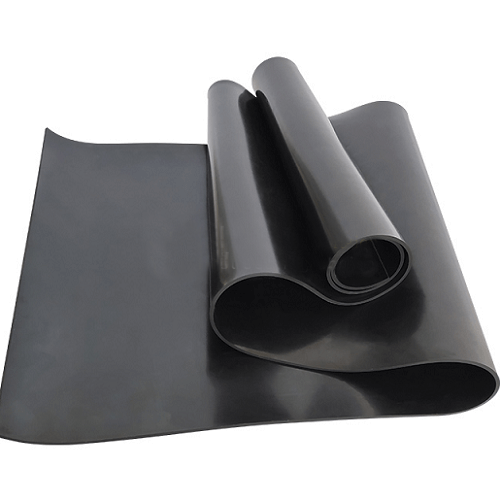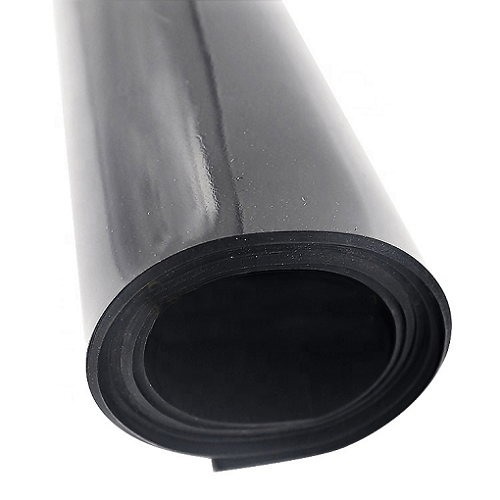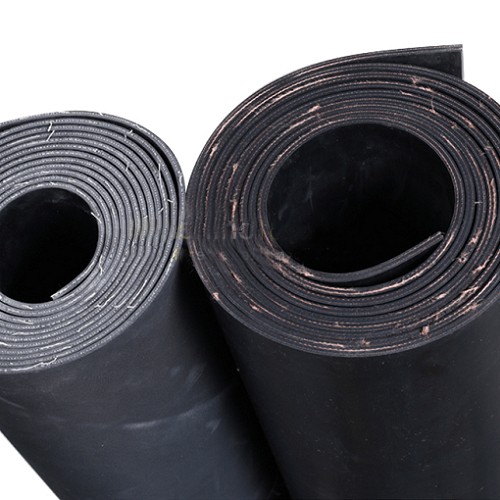
Nitrile Rubber (NBR)
Nitrile Rubber (NBR) is a synthetic elastomer with excellent resistance to oils, fuels, and chemicals, making it ideal for industrial and automotive applications. It offers superior mechanical properties, durability, and flexibility in harsh environments.
Product Specifications
- Material: Nitrile Butadiene Rubber (NBR)
- Hardness (Shore A): 50 - 90
- Tensile Strength: 10 - 30 MPa
- Elongation at Break: 300% - 600%
- Temperature Range: -40°C to +120°C
- Oil Resistance: Excellent
- Chemical Resistance: Good against aliphatic hydrocarbons, oils, and fuels
Technical Properties
| Property | Value |
|---|---|
| Density | 1.00 - 1.20 g/cm³ |
| Tear Strength | 20 - 50 kN/m |
| Compression Set | 15% - 40% (70h at 100°C) |
| Rebound Resilience | 30% - 60% |
Nitrile Rubber (NBR) FAQ
What are the main applications of Nitrile Rubber (NBR)?
Nitrile Rubber (NBR) is widely used in automotive seals, fuel hoses, gaskets, oil-resistant tubing, and industrial gloves due to its excellent oil and chemical resistance.
How does Nitrile Rubber (NBR) compare to natural rubber?
While natural rubber has better elasticity and low-temperature flexibility, Nitrile Rubber (NBR) outperforms it in oil resistance, chemical resistance, and abrasion resistance, making it better suited for industrial applications.
What is the maximum temperature Nitrile Rubber (NBR) can withstand?
Standard Nitrile Rubber (NBR) compounds can typically withstand continuous exposure to temperatures up to 120°C (248°F), with some specialized formulations capable of handling higher temperatures for short durations.
Advantages of Nitrile Rubber (NBR)
- Superior resistance to oils, fuels and many chemicals
- Good mechanical properties including abrasion resistance
- Relatively low cost compared to other specialty elastomers
- Excellent compression set resistance
- Good balance of flexibility and durability
Chemical Compatibility of Nitrile Rubber (NBR)
| Chemical | Resistance |
|---|---|
| Mineral Oils | Excellent |
| Gasoline | Excellent |
| Diesel Fuel | Excellent |
| Water | Good |
| Acetone | Poor |
Additional Nitrile Rubber (NBR) FAQ
Can Nitrile Rubber (NBR) be used in food contact applications?
Standard Nitrile Rubber (NBR) is not food-grade. However, special FDA-compliant grades are available that meet food contact regulations when properly formulated.
How does Nitrile Rubber (NBR) perform in outdoor applications?
Nitrile Rubber (NBR) has moderate resistance to weathering and ozone. For extended outdoor use, it's recommended to use specially compounded NBR with protective additives or consider alternative materials with better weather resistance.
What's the difference between high and low ACN Nitrile Rubber (NBR)?
The acrylonitrile (ACN) content affects properties - high ACN (33-45%) offers better oil resistance but reduced low-temperature flexibility, while low ACN (18-33%) provides better flexibility at lower temperatures with slightly reduced oil resistance.
Physical Properties Comparison
| Property | NBR | NR | EPDM |
|---|---|---|---|
| Oil Resistance | Excellent | Poor | Poor |
| Weather Resistance | Fair | Fair | Excellent |
| Abrasion Resistance | Good | Excellent | Good |