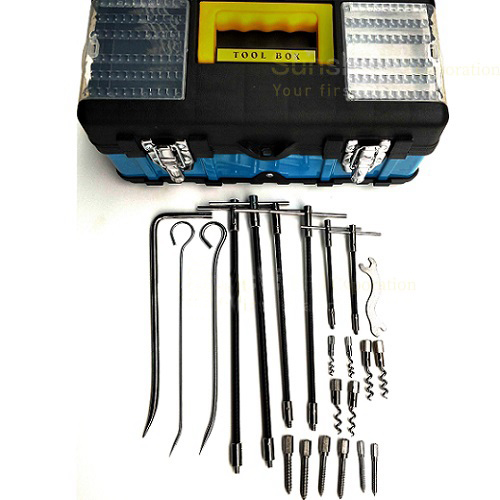
Premium Sealing Accessories & Tools for Industrial Applications
Our comprehensive range of Sealing Accessories & Tools is engineered to meet the most demanding industrial requirements. With precision manufacturing and durable materials, these components ensure reliable performance in challenging environments.
Product Specifications
Key Features of Our Sealing Accessories & Tools:
- Manufactured from high-grade materials including stainless steel, PTFE, and reinforced polymers
- Temperature resistance ranging from -40°F to 500°F (-40°C to 260°C)
- Pressure ratings from vacuum to 5000 psi (345 bar)
- Available in multiple industry-standard sizes from 1/4" to 24" diameters
- Compatible with all major flange standards including ANSI, DIN, and JIS
- Corrosion-resistant options available for chemical processing applications
| Product Series | Material | Temperature Range | Pressure Rating | Applications |
|---|---|---|---|---|
| ST-200 | Stainless Steel 316 | -320°F to 1200°F | 2500 psi | High-pressure systems, cryogenics |
| PT-450 | PTFE Composite | -100°F to 450°F | 1500 psi | Chemical processing, food grade |
| EP-300 | EPDM Rubber | -40°F to 300°F | 500 psi | Water systems, general purpose |
Sealing Accessories & Tools Installation Guide
- Clean all mating surfaces thoroughly before installation
- Inspect Sealing Accessories & Tools for any shipping damage
- Apply appropriate lubricant if specified in the product documentation
- Align components carefully to prevent pinching or misalignment
- Tighten fasteners gradually in a crisscross pattern to recommended torque values
- Perform pressure tests according to industry standards
Sealing Accessories & Tools FAQ
Q: How often should Sealing Accessories & Tools be inspected?
A: Regular inspection intervals depend on application conditions. For critical systems, we recommend visual inspections every 30 days with comprehensive checks every 6 months. In standard industrial environments, annual inspections are typically sufficient. Always follow OEM maintenance schedules for specific equipment.
Q: What are the signs that Sealing Accessories & Tools need replacement?
A: Watch for these indicators: visible wear or cracking, leakage (even minor weeping), compression set exceeding 25%, hardening or softening of material beyond specifications, or any surface degradation. In rotating equipment, increased vibration or noise may indicate seal failure. When in doubt, consult our technical support team with application details.
Q: Can Sealing Accessories & Tools be customized for special applications?
A: Yes, we offer extensive customization options including non-standard sizes, specialty materials (like FDA-compliant or high-purity grades), and unique configurations. Custom designs require application details including media, temperature/pressure cycles, shaft speeds (for dynamic seals), and chemical exposure. Lead times for custom Sealing Accessories & Tools typically range from 2-6 weeks depending on complexity.
Material Selection Guide
| Material | Strengths | Limitations | Best Applications |
|---|---|---|---|
| Nitrile (NBR) | Excellent oil resistance, cost-effective | Limited temperature range, poor ozone resistance | Hydraulic systems, automotive |
| Viton® (FKM) | High temperature, chemical resistance | Higher cost, poor low-temp performance | Chemical processing, aerospace |
| Silicone | Wide temperature range, flexible | Low tear strength, poor abrasion resistance | Food processing, medical |
Why Choose Our Sealing Accessories & Tools?
- Manufactured in ISO 9001:2015 certified facilities
- Comprehensive quality control including 100% dimensional inspection
- Traceable material certifications available upon request
- Technical support from sealing engineers with 10+ years experience
- Global logistics network for fast delivery
Maintenance Best Practices
Proper storage extends the life of Sealing Accessories & Tools significantly. Store in original packaging away from direct sunlight, ozone sources, and extreme temperatures. Keep away from electrical motors that may generate ozone. For rubber components, maintain relative humidity below 75% to prevent mold growth. Metal components should be lightly coated with rust inhibitor if stored long-term.