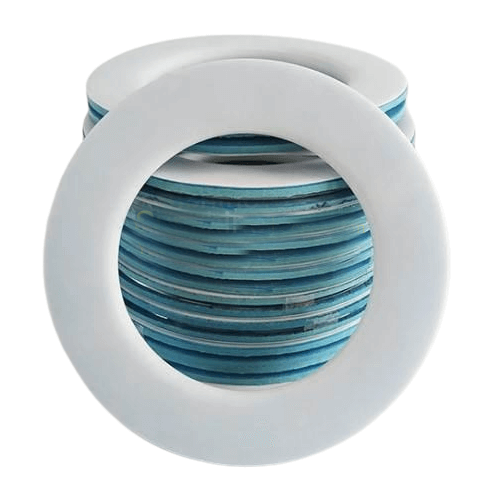
PTFE Envelope Gaskets
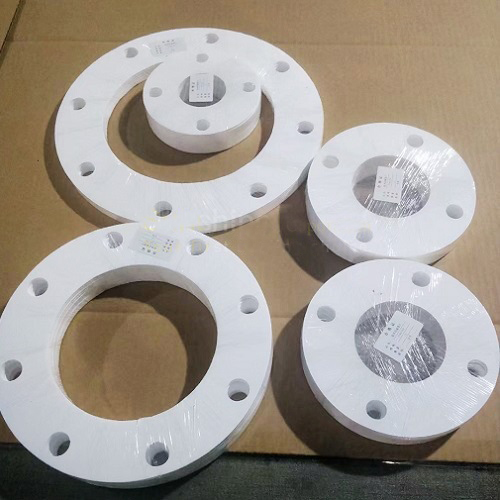
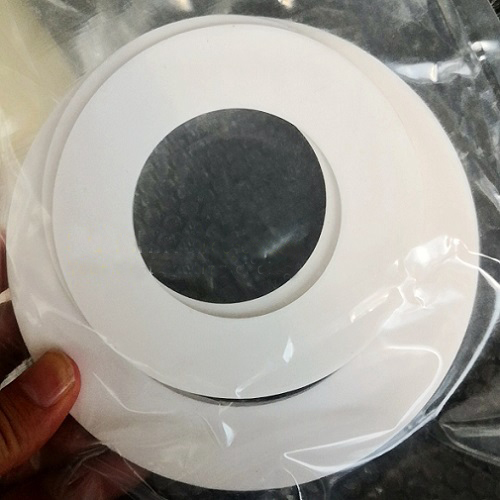
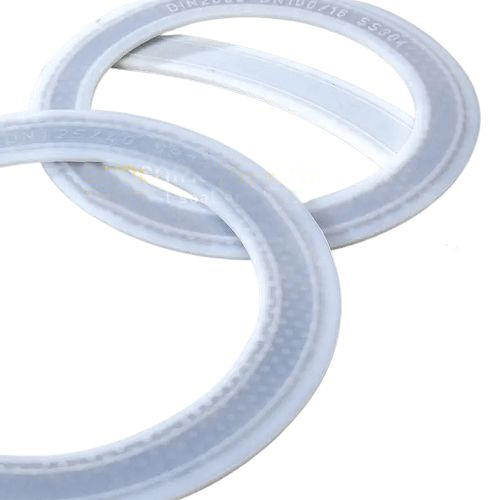
PTFE Envelope Gaskets are essential sealing solutions for industries requiring chemical resistance and high-temperature performance. These gaskets combine the strength of metal with the chemical resistance of PTFE, making them ideal for demanding applications.
Key Features of PTFE Envelope Gaskets
- Excellent chemical resistance against corrosive media
- Wide temperature range from -320°F to +500°F (-196°C to +260°C)
- Low friction coefficient for easy installation
- Non-stick surface prevents product buildup
- Outstanding electrical insulation properties
Technical Specifications
| Parameter | Value |
|---|---|
| Material | PTFE (Polytetrafluoroethylene) envelope with metal insert |
| Thickness Range | 1.5mm - 6mm |
| Diameter Range | 15mm - 1000mm |
| Pressure Rating | Up to 300 psi (20 bar) |
| Tensile Strength | 20-30 MPa |
| Compression Set | <15% |
Applications
PTFE Envelope Gaskets are widely used in:
- Chemical processing equipment
- Pharmaceutical manufacturing
- Food and beverage processing
- Semiconductor production
- Oil and gas pipelines
PTFE Envelope Gaskets FAQ
What makes PTFE Envelope Gaskets different from standard PTFE gaskets?
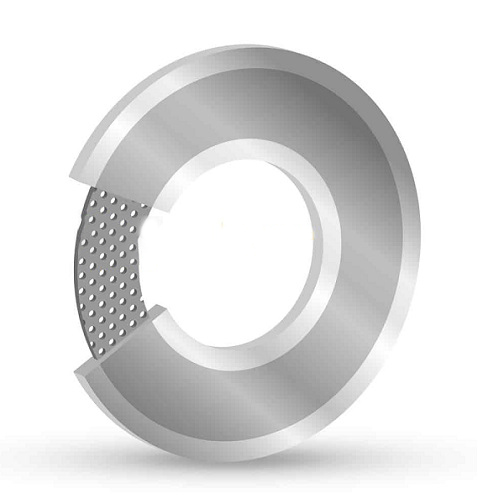
PTFE Envelope Gaskets feature a unique construction where a thin PTFE layer completely envelopes a metal insert. This design combines the chemical resistance of PTFE with the structural strength of metal, offering superior performance in high-pressure applications compared to standard PTFE gaskets which may deform under pressure.
How do I properly install PTFE Envelope Gaskets?
Proper installation of PTFE Envelope Gaskets requires clean, undamaged flanges with appropriate surface finish. Bolt torque should be applied gradually in a crisscross pattern to ensure even compression. Never reuse PTFE Envelope Gaskets as the sealing properties degrade after initial compression.
What temperature range can PTFE Envelope Gaskets withstand?
PTFE Envelope Gaskets typically operate in temperatures ranging from -320°F (-196°C) to +500°F (+260°C). The exact range depends on the specific metal core material and application conditions. For extreme temperature applications beyond these limits, special formulations may be available.
Material Specifications
| Component | Material Options | Properties |
|---|---|---|
| Envelope | Virgin PTFE, Filled PTFE | Chemical inertness, low friction |
| Core | Stainless Steel, Carbon Steel, Nickel | Structural support, pressure resistance |
| Filler Materials | Glass, Graphite, Bronze | Enhanced mechanical properties |
Benefits Comparison
| Feature | PTFE Envelope Gaskets | Rubber Gaskets | Compressed Fiber Gaskets |
|---|---|---|---|
| Chemical Resistance | Excellent | Fair | Good |
| Temperature Range | -320°F to +500°F | -40°F to +250°F | -50°F to +900°F |
| Pressure Resistance | High | Medium | Medium-High |
PTFE Envelope Gaskets FAQ (Continued)
Can PTFE Envelope Gaskets be customized for specific applications?
Yes, PTFE Envelope Gaskets can be fully customized in terms of dimensions, metal core material, PTFE thickness, and filler materials. Custom shapes beyond standard round gaskets are also available for specialized flange configurations.
How do I determine the correct thickness for my PTFE Envelope Gasket?
The appropriate thickness depends on flange surface conditions, pressure requirements, and bolt load capacity. As a general rule, thinner gaskets (1.5-3mm) work well for smooth flanges and high pressures, while thicker gaskets (3-6mm) compensate for flange imperfections. Consult with our engineers for specific recommendations.
What maintenance is required for PTFE Envelope Gaskets?
PTFE Envelope Gaskets require minimal maintenance due to their non-stick properties and chemical resistance. Regular visual inspections for signs of extrusion or creep are recommended, especially in high-temperature applications. No lubrication or special cleaning is typically needed.
Ordering Information
When ordering PTFE Envelope Gaskets, please provide:
- Inner diameter and outer diameter measurements
- Required thickness
- Metal core material specification
- Operating temperature and pressure
- Chemical exposure information
PTFE Envelope Gaskets FAQ (Final Section)
Are PTFE Envelope Gaskets FDA compliant for food processing applications?
Virgin PTFE Envelope Gaskets meet FDA requirements for food contact applications under 21 CFR 177.1550. For food processing, we recommend specifying virgin (unfilled) PTFE material with appropriate documentation to ensure compliance.
What certifications are available for PTFE Envelope Gaskets?
Our PTFE Envelope Gaskets can be supplied with various certifications including ISO 9001, PED 2014/68/EU, ASME B16.20, and others depending on application requirements. Certification documentation is available upon request.
How long is the typical service life of PTFE Envelope Gaskets?
Service life varies significantly based on operating conditions, but properly installed PTFE Envelope Gaskets typically last 3-7 years in normal service. In aggressive chemical or high-temperature environments, more frequent replacement may be necessary. Regular inspection is key to preventing unexpected failures.
Why Choose Our PTFE Envelope Gaskets?
- Precision manufacturing with tight tolerances
- Comprehensive material testing and quality control
- Technical support from application engineers
- Fast turnaround on standard and custom orders
- Competitive pricing with volume discounts